Use case
Write a patient-friendly summary of the plan
Draft a plain-language summary for the patient from the same sources as your assessment. Set the audience to the patient and keep it short.

The situation
Start from a real clinical day
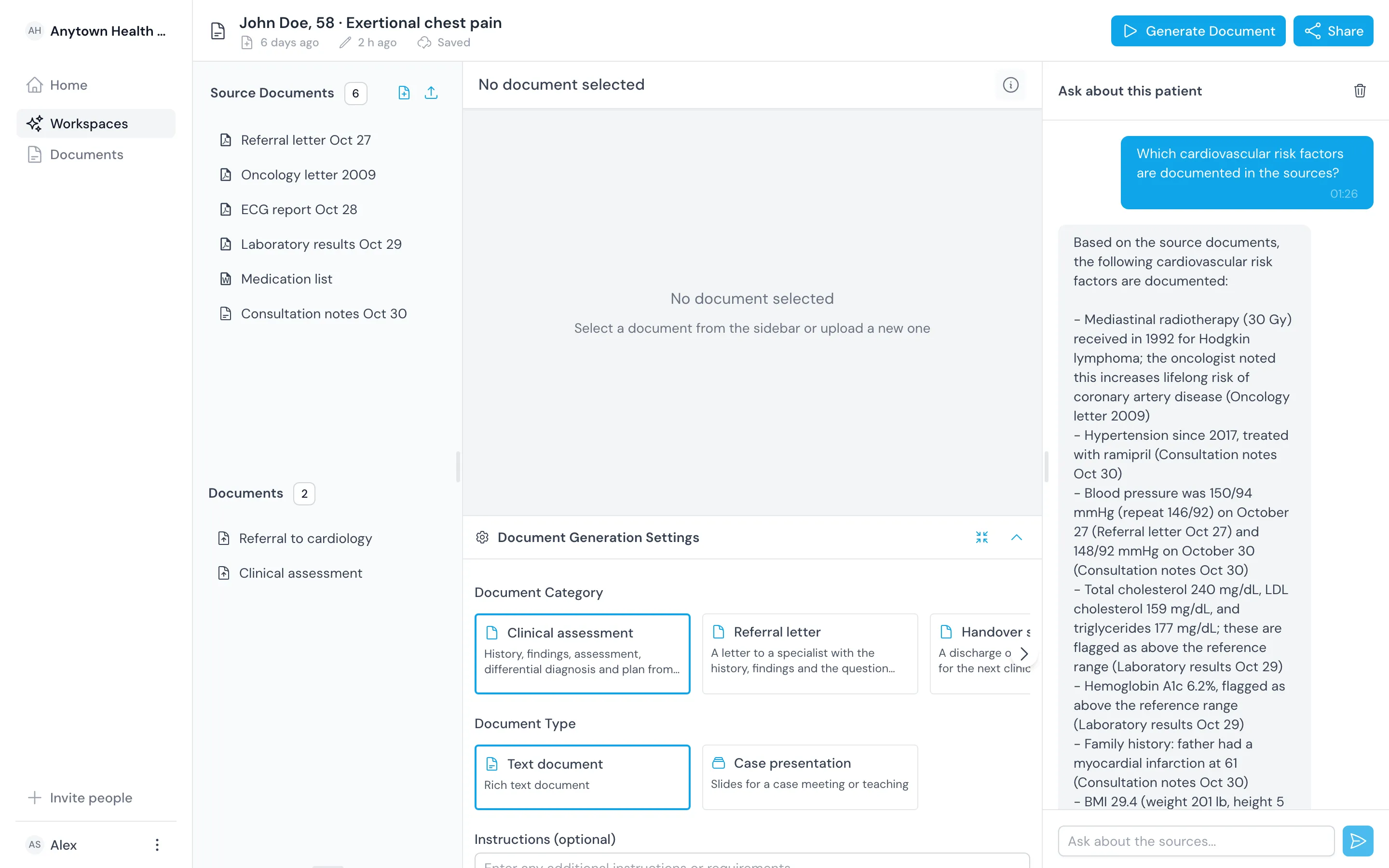
Dr. Alex Sample has assessed John Doe and referred him to cardiology. John asks for something in writing to show his family.
He wrote the assessment for clinicians. John needs the same plan in plain words.
Add these sources to the workspace
- 1
The finished clinical assessment
- 2
The referral letter
- 3
The visit note with the safety-netting advice
What you ask
Ask for what you need in your own words
Draft a patient-friendly summary for John: what we found, what happens next, and when to seek help. Plain language, short.
What we found
You get the findings and the working explanation in everyday words.
What happens next
You get the CT coronary angiogram, the echocardiogram and the cardiology referral, with who arranges each.
When to seek help
You get the safety-netting advice from your note in plain words.
Before you use it
Check these before you file anything
You edit every draft and make every clinical decision. Check each answer against the source it names.
- 1
Confirm the safety-netting advice matches what you said
- 2
Confirm nothing goes beyond the plan you made
- 3
Use wording the patient will understand
Questions
Frequently asked questions
Can I change the tone and length?
Yes. Set audience, tone and length when you draft, then edit the text in the editor.
More
Keep exploring
- Read a patient's whole history in an emergency
An emergency doctor loads 15 years of records and asks for the allergies, blood thinners, airway history and wishes that shape the next hour.
- Prepare for a new patient with a thick referral
A cardiologist adds a referral and years of letters and results to one workspace, asks for the relevant history and results with dates, and checks each one before clinic.
- Review new results against the history
A family physician adds a batch of new lab results next to earlier ones and the visit note, asks what changed and what bears on the complaint, and checks units and dates.