Use case
Prepare for a new patient with a thick referral
Add the referral and every earlier letter to the patient's workspace before clinic. Ask for the history that bears on the question, with the source of each statement named.

The situation
Start from a real clinical day
Dr. Jordan Example, a cardiologist, has John Doe on tomorrow's clinic list. The referral from Anytown Health Center asks about six weeks of exertional chest pain.
The referral arrives with years of earlier letters, lab results and an ECG report. Reading them in clinic would take most of the appointment.
Add these sources to the workspace
- 1
The primary care referral letter, as a PDF
- 2
Earlier letters from other clinics, including a 2009 oncology follow-up, as PDF and Word files
- 3
Lab results exported to Excel
- 4
The ECG report, as a PDF
- 5
The current medication list
What you ask
Ask for what you need in your own words
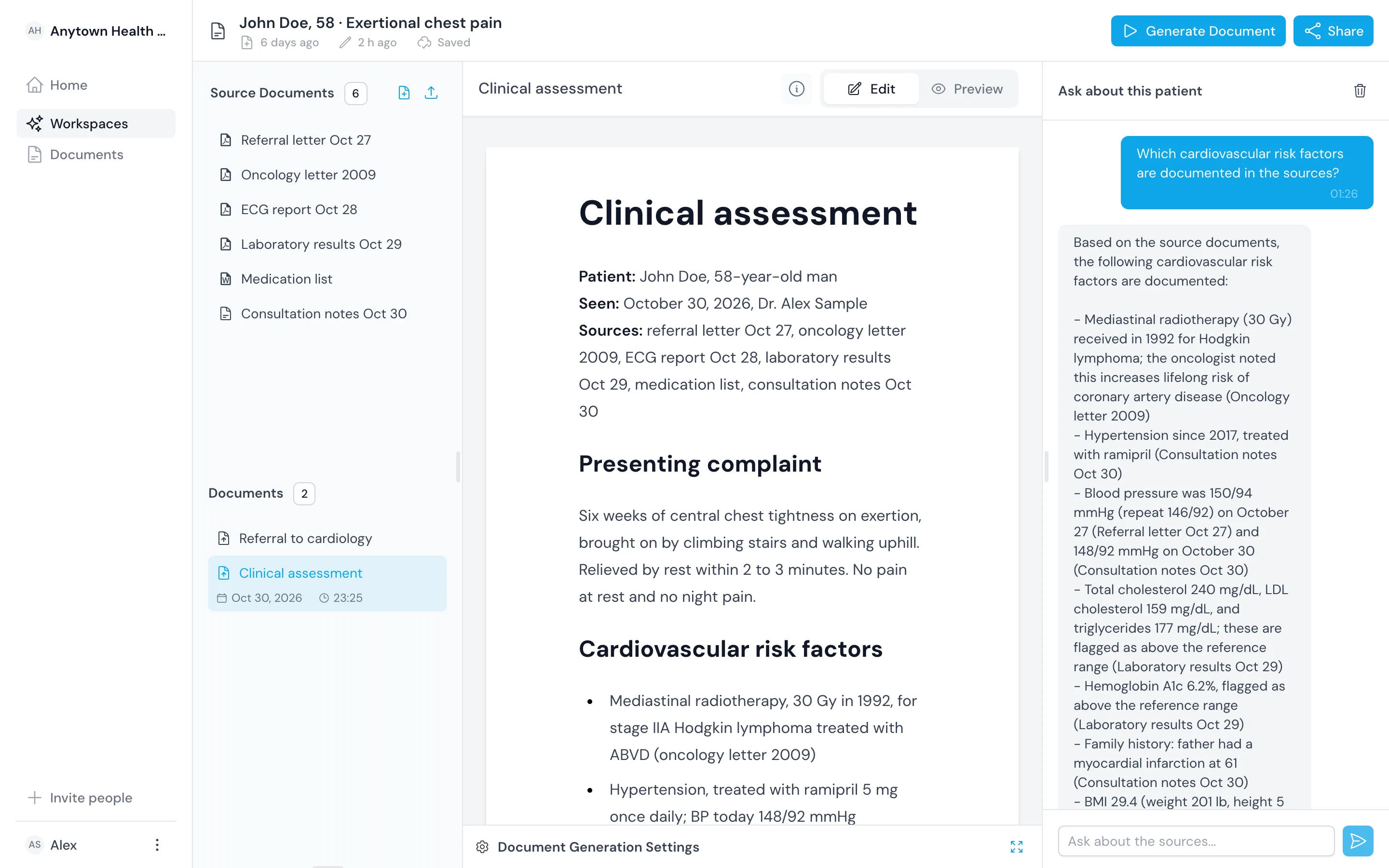
Summarize the history relevant to exertional chest pain, list every cardiovascular risk factor and result with its date, and name what is missing.
See a history with sources
You get a short history that names the letter or report behind each statement.
See risk factors and results with dates
You get hypertension, the family history, LDL, HbA1c and the ECG, plus mediastinal radiotherapy for Hodgkin lymphoma in 1992, which appears only in the 2009 oncology letter. Each comes with the date of its source.
See the gaps
You learn that no echocardiogram appears in the sources although the referral describes a murmur, so you can request one before clinic.
Before you use it
Check these before you file anything
You edit every draft and make every clinical decision. Check each answer against the source it names.
- 1
Open each cited source and confirm the value and date
- 2
Confirm the medication list with the patient in clinic
- 3
Check diagnoses inherited from old letters against their evidence
Questions
Frequently asked questions
What if two letters disagree?
Ask which sources mention the fact and read both. The answer names each source, so you can see the disagreement and decide.
Does the summary go into the record?
Only if you choose. You can draft the clinic letter from it, edit it and export it to PDF or Word.
More
Keep exploring
- Read a patient's whole history in an emergency
An emergency doctor loads 15 years of records and asks for the allergies, blood thinners, airway history and wishes that shape the next hour.
- Review new results against the history
A family physician adds a batch of new lab results next to earlier ones and the visit note, asks what changed and what bears on the complaint, and checks units and dates.
- Check a referral has what the specialist needs
A family physician asks what a cardiology referral for palpitations needs that the sources do not yet contain, fills the gaps, then drafts the referral letter and edits it.