Presentations
Gather and document what each presentation needs
Each page lists the sources worth collecting, the history questions and findings to record, the red flags to ask about and what the assessment should contain.

Presentations
Heart and lungs
In these presentations, you often have an ECG, a troponin or a chest X-ray in the sources already.
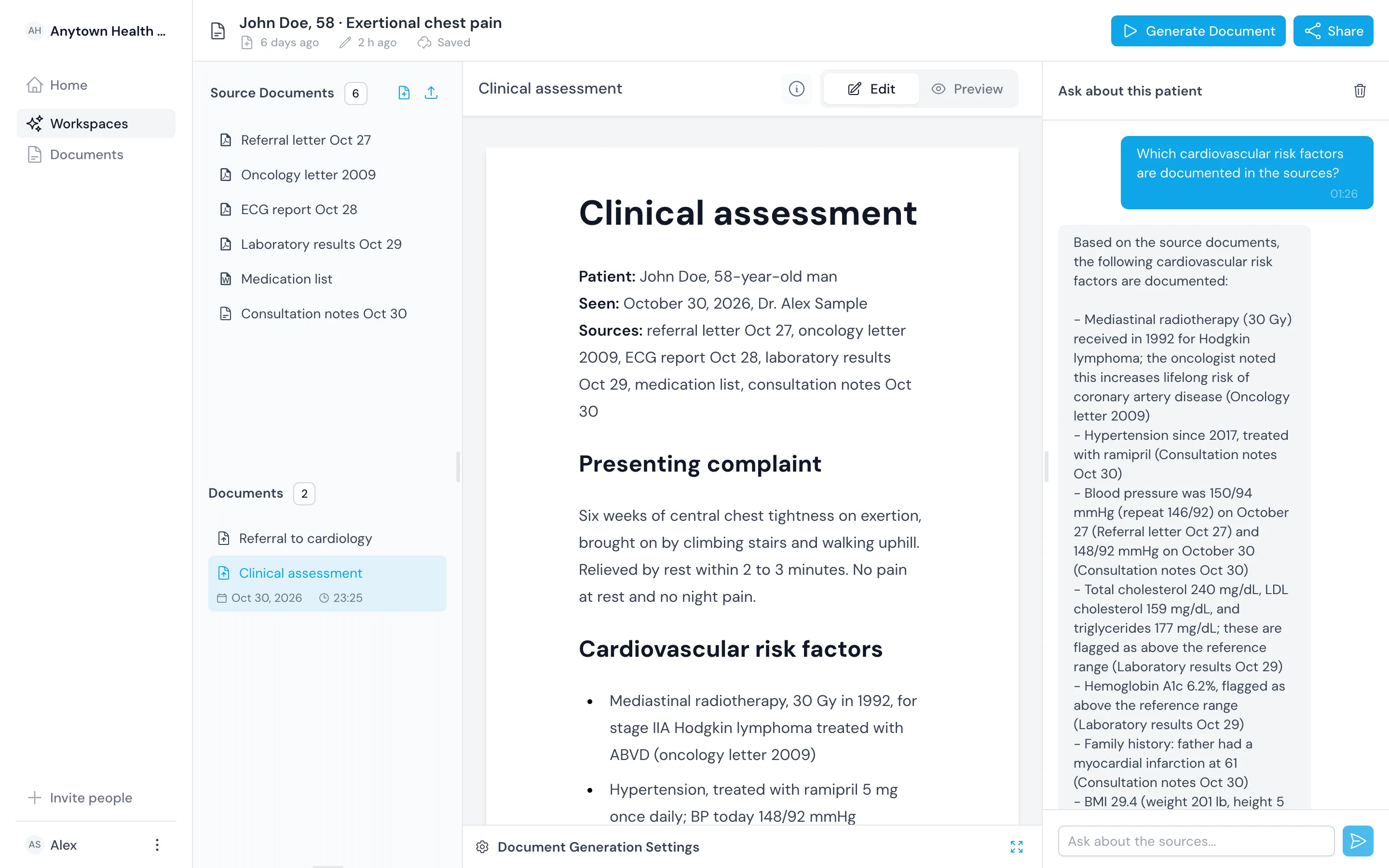
- Chest painIn a chest pain workup, gather and document the character and timing of the pain, cardiovascular risk factors, ECG and troponin results with times, and the red flags you asked about.
- BreathlessnessIn a breathlessness workup, gather and document onset and tempo, exercise tolerance, cardiac and respiratory history, oxygen saturation, and the spirometry, imaging and lab results already on file.
- PalpitationsIn a palpitations workup, gather and document how episodes start and stop, rate and rhythm, triggers, any ECG captured during symptoms, thyroid and electrolyte results, and the red flags.
Presentations
Head and nervous system
In these presentations, the history and a focused neurological examination carry most of the weight.
- HeadacheIn a headache workup, gather and document onset and pattern, associated features, analgesic use, blood pressure and a neurological examination, and the red flags for a secondary cause.
- DizzinessIn a dizziness workup, gather and document what the patient means by dizzy, episode timing and triggers, lying and standing blood pressure, a focused neurological and ear examination, and the red flags.
Presentations
Older adults
In these presentations, a collateral history and the medication list matter as much as the examination.
- Falls in older adultsIn a falls workup, gather and document the circumstances of each fall, loss of consciousness, injuries, the medication list, lying and standing blood pressure, gait, vision and cognition.
- New confusionIn a workup for new confusion, gather and document onset and fluctuation, baseline cognition from a collateral history, recent medication changes, vital signs, and the possible precipitants.
Presentations
General and abdominal
These presentations have a wide differential, so you read results from several sources together.
- FatigueIn a fatigue workup, gather and document duration and pattern, sleep and mood, weight change, functional impact, a focused examination, and the screening lab results already on file.
- Unintentional weight lossIn a workup for unintentional weight loss, gather and document weights with dates, appetite and diet, a systems review, the screening results already on file, and the red flags.
- Abdominal painIn an abdominal pain workup, gather and document site, onset and character, bowel and urinary symptoms, gynecological history where relevant, examination findings, results, and the red flags.