Use case
Follow up a patient seen by several clinics
When letters from several clinics pile up, ask for the active problems, the medication changes and the plan items nobody has closed.

The situation
Start from a real clinical day
Mary Major, 81, is coming to a geriatric clinic after two falls. In the past year she has seen cardiology, neurology and orthopedics, and each clinic changed something.
The geriatrician needs one picture of what is active, what changed and what is still outstanding.
Add these sources to the workspace
- 1
Letters from each clinic, as PDF and Word files
- 2
The emergency department notes from both falls
- 3
The current medication list
- 4
Recent lab results and the ECG report
What you ask
Ask for what you need in your own words
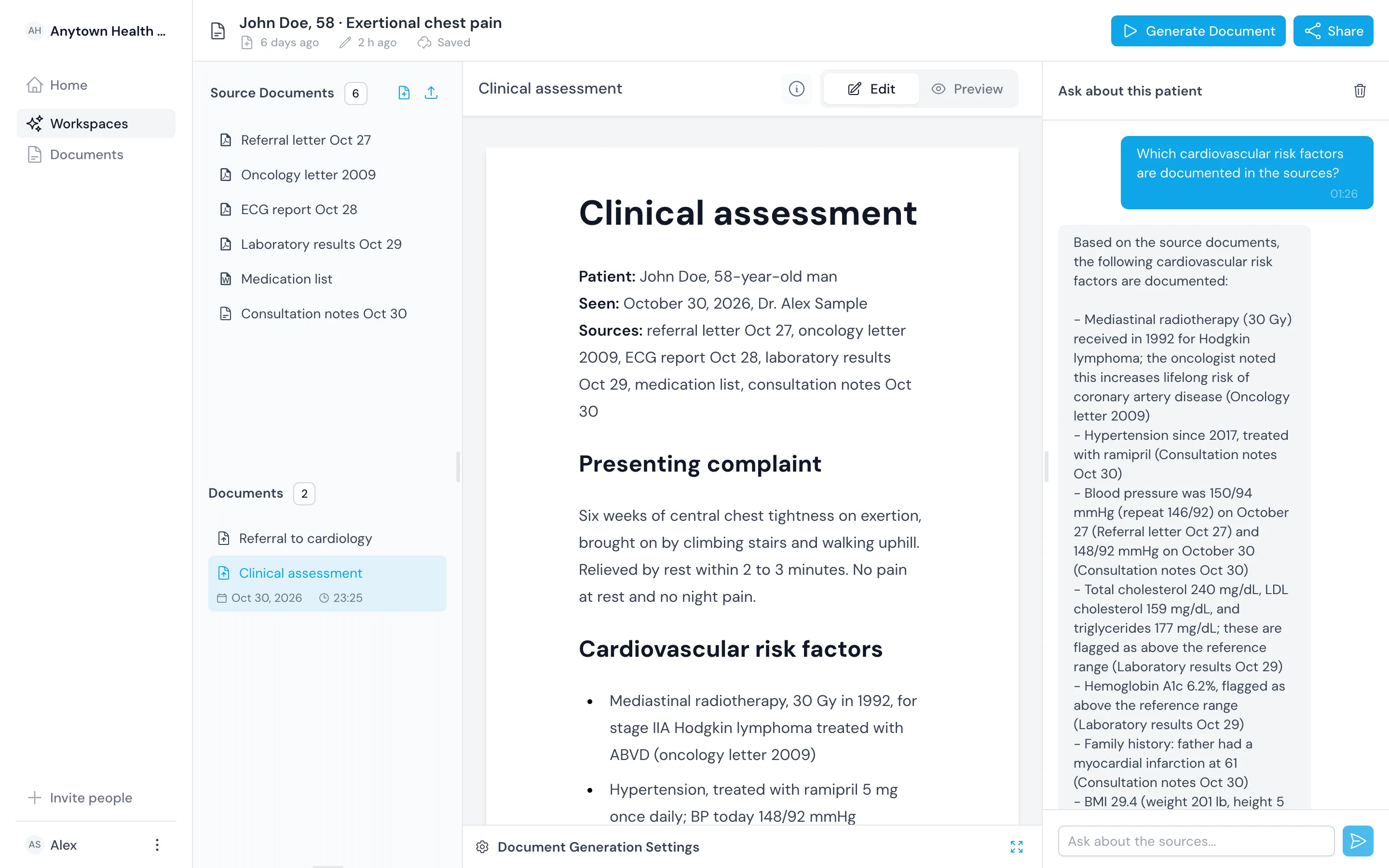
List the active problems, every medication change in the last year with the date and clinic, and the plan items from the letters that have no recorded outcome.
Get a problem list
You see each active problem with the letter it comes from.
Get a medication timeline
You see each change with its date, dose and the clinic that made it.
Get the open actions
You see plan items, such as a requested bone density scan, that have no result in the sources.
Before you use it
Check these before you file anything
You edit every draft and make every clinical decision. Check each answer against the source it names.
- 1
Reconcile the medication list with the patient or caregiver
- 2
Confirm open actions are truly open before chasing them
- 3
Check inherited diagnoses against their evidence
Questions
Frequently asked questions
Can colleagues see the same workspace?
Yes. Share it with colleagues in your organization as viewer or editor.
More
Keep exploring
- Read a patient's whole history in an emergency
An emergency doctor loads 15 years of records and asks for the allergies, blood thinners, airway history and wishes that shape the next hour.
- Prepare for a new patient with a thick referral
A cardiologist adds a referral and years of letters and results to one workspace, asks for the relevant history and results with dates, and checks each one before clinic.
- Review new results against the history
A family physician adds a batch of new lab results next to earlier ones and the visit note, asks what changed and what bears on the complaint, and checks units and dates.